4-Week Puppy Training Routine: Potty, Commands, Social
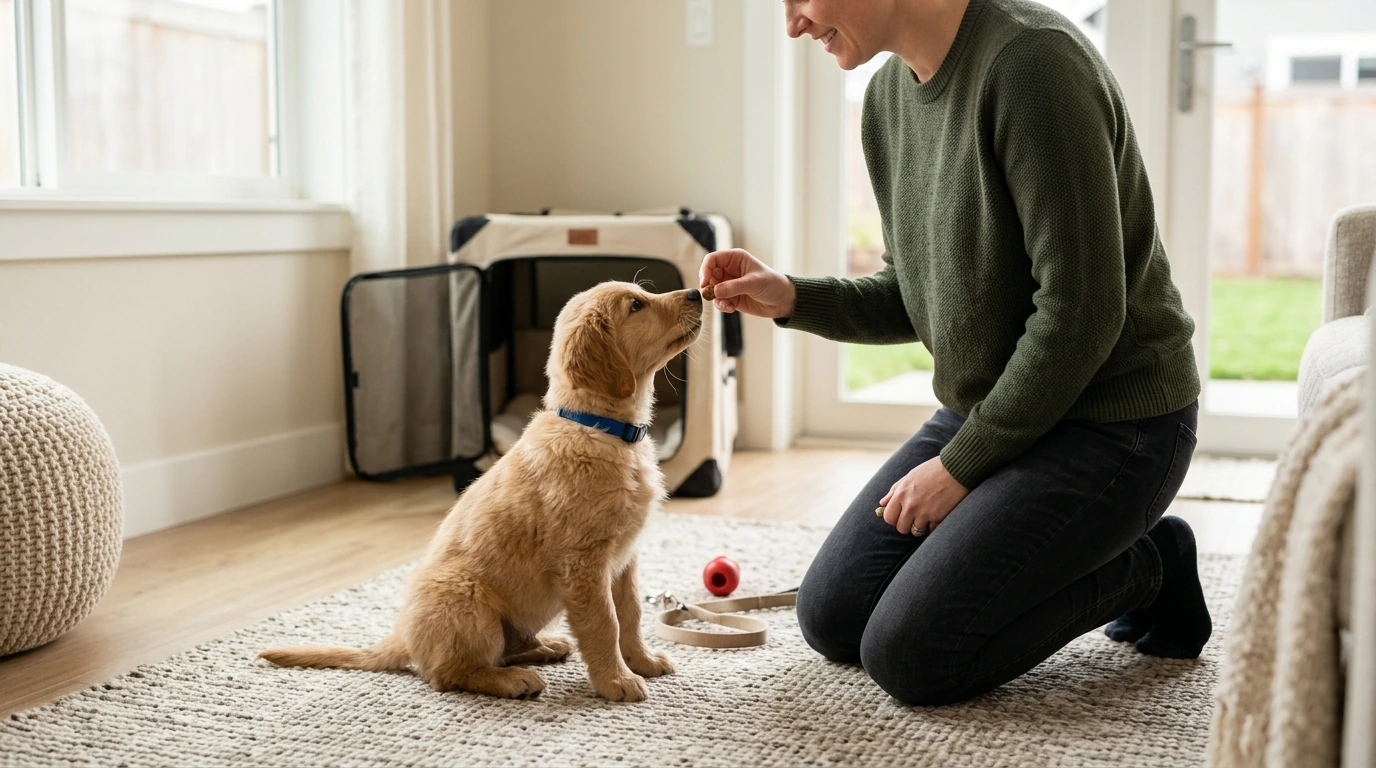
New Puppy Training Starter Guide: A 4-Week Routine for House Training, Commands, and Social Skills
A new puppy learns fastest with short sessions, consistent cues, and a predictable daily rhythm. The goal for the first month isn’t “perfect obedience”—it’s building habits: potty success through prevention, easy-to-repeat foundational commands, and calm confidence around everyday life. Below is a simple 4-week routine that keeps training clear and doable, even on busy days.
What to Set Up Before Training Starts
- Pick one outdoor potty spot and take your puppy to that same area every time. Familiar smells help the behavior “click” faster.
- Create a confinement plan: a crate (or exercise pen) plus a puppy-proofed zone for supervised play. This prevents accidents and unsafe chewing.
- Standardize cues across the household (sit, down, come, leave it). One word per behavior, plus a consistent hand signal if you use one.
- Set up rewards: soft high-value treats for new skills, kibble for easy reps, and a toy reward for puppies that love play.
- Track patterns (meals, potty trips, naps, accidents). Even a simple notes app makes timing problems obvious within days.
Week 1: Routine, Bonding, and Preventing Accidents
Week 1 is about management and clarity. Your puppy should be supervised, crated, or in a pen—no free roaming yet. This isn’t strict; it’s how you prevent mistakes before they happen.
- Potty timing basics: go out after waking, after eating/drinking, after play, and every 30–60 minutes while awake (adjust based on age and success rate).
- Reward immediately (within 1–2 seconds) after your puppy finishes pottying outdoors so the connection is unmistakable.
- Name recognition: say the name once, then mark (“yes”) and reward when your puppy looks toward you.
- Gentle handling games: briefly touch paws/ears/mouth, reward, and stop before squirming starts—many future grooming battles are prevented here.
- Keep sessions tiny: 1–3 minutes, several times a day, beats one long session.
| Time block | Goal | What to do |
|---|---|---|
| Morning (wake-up) | Potty success | Carry or leash to potty spot, reward immediately after finishing |
| After meals | House-training pattern | Potty trip within 5–15 minutes, then calm play |
| Play windows | Prevent nipping + build focus | 1–2 minute training reps, then chew/toy time |
| Naps | Build independence | Crate/pen nap with a safe chew, short and calm departures |
| Evening | Wind-down | Low-key play, last potty trip, consistent bedtime routine |
Week 2: Leash Skills, “Sit/Down,” and Bite Inhibition
Week 2 adds structure without pushing duration. Think: easy wins that create a puppy who can be guided safely and handled kindly.
- Leash introduction: start indoors. Reward for being near you and for any slack-leash moments; avoid dragging or long hallway marches.
- Teach “sit” and “down” with luring: move the treat slowly, mark the instant your puppy hits the position, then reward.
- Add a release word (like “okay”) so your puppy learns when the cue is finished—this prevents “sticky sits” later.
- Bite inhibition: if teeth hit skin, pause attention briefly (stand up, hands away). Then redirect to a chew or tug toy.
- Prevent over-arousal: many “wild puppy” moments are overtired moments—short play bouts plus scheduled naps help enormously.
- House training stays steady: only extend time between potty trips after multiple successful days in a row.
Week 3: “Come,” “Leave It,” and Calm in Real-Life Situations
Week 3 builds safety skills and everyday manners. Keep rewards generous—recall and impulse control are worth paying well.
- Start “come” indoors: say the cue once, move backward, and reward heavily when your puppy reaches you.
- Make recall a party: treats, praise, and a quick game. Avoid calling your puppy only to end all fun (that weakens the cue fast).
- Teach “leave it” with a closed-hand treat. Reward disengagement, then progress to a treat on the floor with supervision.
- Build calm: reward offered behaviors like sitting, lying down, or checking in before meals, before going outside, and before greetings.
- Practice “settle” on a mat: reward for being on the mat, then slowly increase duration.
- Fix setbacks early: excitement peeing, missed signals, and too much freedom too soon are usually management issues, not “stubbornness.”
Week 4: Social Skills, Confidence, and Polite Greetings
Socialization is about positive exposure, not forced interaction. Aim for “notice it, feel safe, earn rewards, leave on a good note.”
House-Training Troubleshooting: Fix the System, Not the Puppy
For socialization best practices and safety, see the AVSAB Puppy Socialization Position Statement. For additional training fundamentals, the American Kennel Club’s puppy training basics is a helpful reference, and the AVMA dog bite prevention guidance underscores why early handling and polite greetings matter.
Printable Tools That Make Consistency Easier
Recommended Starter Resource
- New Puppy Training Starter Guide (printable eBook) — a 4-week schedule covering house training, core commands, and low-pressure socialization ideas.
- Mindful Clarity: Journal & Prompts — a simple way to keep daily notes on potty timing, progress, and what’s working without overcomplicating your routine.
FAQ
How often should a new puppy go outside to potty?
Plan on after waking, after meals/drinks, after play, before crating, and at frequent intervals while your puppy is awake (often every 30–60 minutes at first). Adjust based on age and consistency, and only extend intervals after several success days in a row.
What should be taught first: sit, come, or crate training?
Start with management and comfort: a crate/pen routine plus name recognition so your puppy can be guided safely and prevented from practicing accidents. Add sit/down for quick wins, and begin recall games indoors early so “come” becomes a happy habit.
How do socialization and vaccination timelines work together?
Discuss risk level with your veterinarian, since disease risk varies by region and lifestyle. Many puppies can safely socialize through controlled puppy classes, carrying them in public, and avoiding high-risk dog areas while still getting positive exposure to sights, sounds, and friendly people.










Leave a comment