New Kitten Feeding Plan: Best Food, Schedule & Tips
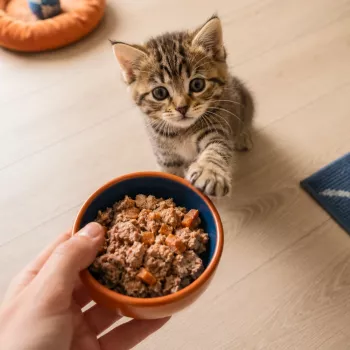
Feeding Your New Kitten Right: A Simple Plan for Healthy Growth and Happy Mealtimes
A new kitten grows fast, and the right food choices early on support steady weight gain, strong bones, brain and eye development, and fewer tummy troubles. A calm routine matters, too—kittens do best when meals are predictable and their diet stays consistent. Below is a practical feeding plan you can follow from the first week home through the first birthday.
What a Growing Kitten Needs Most
Kittens aren’t just “small cats.” Their bodies are building muscle, organs, and bone at a rapid pace, so their food needs to be more nutrient-dense than adult cat food.
- High animal-based protein to build lean muscle and support rapid growth.
- Higher fat than adult formulas for energy plus healthy skin and a soft coat.
- DHA (an omega-3) to support brain and vision development, especially early on.
- Balanced minerals (calcium/phosphorus) for bones and teeth—avoid guessing with supplements.
- Consistent hydration; wet food can help, but fresh water access is always essential.
For more detailed nutrition guidance and life-stage considerations, the AAFP Feline Life Stage Guidelines and the WSAVA Global Nutrition Guidelines are strong, vet-informed references.
Choosing the Right Starter Food
When you’re staring at a wall of cans and bags, focus on a few non-negotiables:
- Look for “complete and balanced for growth” on the label (AAFCO statement in the U.S.).
- Choose reputable manufacturers with clear quality control and transparent sourcing.
- Pick a texture your kitten accepts: pâté and minced wet foods are often easiest for young kittens; small kibble is better once chewing is comfortable.
- Avoid cow’s milk; most kittens become lactose intolerant after weaning. If supplementing is truly needed, use kitten milk replacer with veterinary guidance.
- If your kitten came with a current diet, keep it for several days to reduce stress, then transition slowly if you’re switching foods.
Quick starter choices by age
| Kitten age | Best starting options | Notes |
|---|---|---|
| 0–4 weeks | Kitten milk replacer (KMR) only | Bottle-feeding and warmth are critical; veterinary guidance recommended. |
| 4–6 weeks | KMR + gruel (wet kitten food mixed with warm water/KMR) | Introduce shallow dish feeding; small frequent meals. |
| 6–8 weeks | Wet kitten food; softened kibble as tolerated | Most kittens wean here; keep portions small and frequent. |
| 8–12 weeks | Wet kitten food + optional kitten kibble | Prioritize calories and consistency; monitor stool quality. |
| 3–12 months | Complete kitten diet (wet, dry, or mixed) | Continue kitten formula; growth remains rapid through most of the first year. |
How Much and How Often to Feed
Start with the package feeding guide, then adjust based on your kitten’s body condition, appetite, and vet check-ins. Kittens should gain weight steadily—weekly weigh-ins (even on a kitchen scale) can help you catch problems early.
- 8–12 weeks: 4 meals per day
- 3–6 months: 3 meals per day
- 6–12 months: 2–3 meals per day
A healthy look is a kitten with energy, a gently visible waist when viewed from above, and ribs that are easy to feel but not sharply visible. If your kitten starts looking “round like a ball,” reduce calories slightly and re-check portions. If ribs are showing and appetite is frantic, increase food and consult your vet.
Treats should stay small and simple—think single-ingredient, kitten-safe options. A practical rule is to keep treats under about 10% of daily calories so the main diet still delivers the right nutrient balance.
Transitioning Foods Without Upset Stomachs
Digestive upset is one of the most common issues after adoption, and sudden diet changes often make it worse. A slow transition protects the gut and keeps the litter box predictable.
- Transition over 7–10 days: start 75% old / 25% new, then increase the new food every 2–3 days.
- If stools loosen, pause at the current ratio for a few days before increasing again.
- Avoid frequent flavor/brand switching during the first weeks at home; stability helps digestion.
- Remove uneaten wet food after 20–30 minutes to prevent spoilage.
- Contact a veterinarian promptly for persistent vomiting, diarrhea lasting more than 24 hours, lethargy, or refusal to eat.
Wet vs. Dry vs. Mixed Feeding
There’s no single “perfect” format for every kitten. What matters most is that the diet is complete and balanced for growth and you feed consistent daily amounts.
- Wet food: Supports hydration and can be easier for small mouths; helpful for kittens who don’t drink much yet.
- Dry food: Convenient for measured portions; choose kitten-specific kibble with appropriate calorie density.
- Mixed feeding: Often the best of both worlds—set meals of wet food plus a measured amount of dry. Avoid leaving unlimited kibble out if weight gain accelerates.
For dental health, plan on regular veterinary checks and age-appropriate chew options. Kibble alone isn’t a complete dental strategy.
Common Mistakes to Avoid
When to Move From Kitten Food to Adult Food
A Simple Home Feeding Setup
Helpful Resources (Available Now)
- Feeding Your New Kitten Right | Essential Kitten Nutrition eBook | Learn What Food to Start a New Kitten On for Healthy Growth & Happy Mealtimes
- Mindful Clarity: Journal & Prompts | Printable Journal with Daily Mindfulness Prompts, Gratitude Exercises & Reflective Quotes for Mental Well-Being
FAQ
What is the healthiest food to feed a kitten?
The healthiest option is a complete and balanced kitten formula labeled for growth from a reputable manufacturer, with high-quality animal protein, appropriate fat, DHA, and balanced minerals. Feed measured portions that support steady weight gain and a healthy body condition.











Leave a comment